Giving text and figures a shared source of truth
LSMFC jointly compiles manuscripts and scientific figures. It addresses a common failure: after an experiment changes, abstracts, paragraphs, figures and captions can drift into different versions. Theory, methods, code mappings, experiments, literature and visual evidence first enter shared registries. Text and figures use an argument–visual intermediate representation. Central claims require evidence and warrants; unresolved research gaps generate further tasks rather than stronger wording.
Diagnosis, joint planning and cross-checking
The workflow moves from fact registries into research diagnosis, including theory, method–code alignment, statistics and citation scope. Story and figure planning are performed together, followed by separate manuscript and figure compilers. Cross-modal linking checks that paragraphs, tables, figures and captions support the same claims. Dependency tracking propagates changed facts and marks affected artefacts for renewed checks. A visual refinement layer may change expression, but not data or scientific relationships.
Toolchain capability and research responsibility
The current CPU-first package provides demonstrations, provenance tracking, release artefacts, review and sign-off mechanisms. Local demos can exercise a complete build or show compilation stopping when evidence is insufficient and research repair is required. It does not provide dedicated model training or cluster infrastructure. Language providers remain constrained against adding facts or claims. The tool supports consistency and inspectability; original evidence, valid verification and author responsibility still determine whether the research holds.
HOW IT WORKS
From research inputs to evidence-bound expression
The local CPU toolchain includes prepared inputs, build artefacts and a stored refusal-to-compile case. This walkthrough focuses on author steps and how missing facts affect text and figures.
Inputs
- Theory, assumptions, method components and code mappings
- Experiment records with instances or seeds and declared scope
- Literature source spans and support relationships
- Traceable images or method diagrams
- Registries linking claims, evidence and warrants
Retained artifacts
- Manuscript source and PDF, tables and editable vector figures
- Cross-checks between paragraphs, figures and claims
- Required research tasks and acceptable outcomes
- Artefact dependencies, provenance, sign-offs and a release manifest
A four-step walkthrough
- 01
The author supplies facts and claims
Materials enter their input packages, while central claims are bound to evidence, scope, warrants and possible defeaters. A polished draft cannot substitute for these sources.
- 02
Diagnose scientific gaps first
The system checks method–code alignment, auditable statistics and whether citations support the claim. When central evidence is missing, it returns research repair tasks or asks for a narrower or removed claim.
- 03
Let text and figures share one argument
Joint story–figure planning leads to paragraphs, plots and captions, followed by checks of numbers, terms and their claims. A changed evidence item marks its dependants, requiring stale artefacts to be rebuilt and reviewed.
- 04
Review and sign before preparing delivery
The author reviews the central claims, evidence freeze, primary figures and citations before signing the final package. Outputs include the manuscript, editable figures, review reports and provenance records. Input changes invalidate prior sign-offs.
EXAMPLE
Stored toolchain demonstration: when efficiency evidence is missing
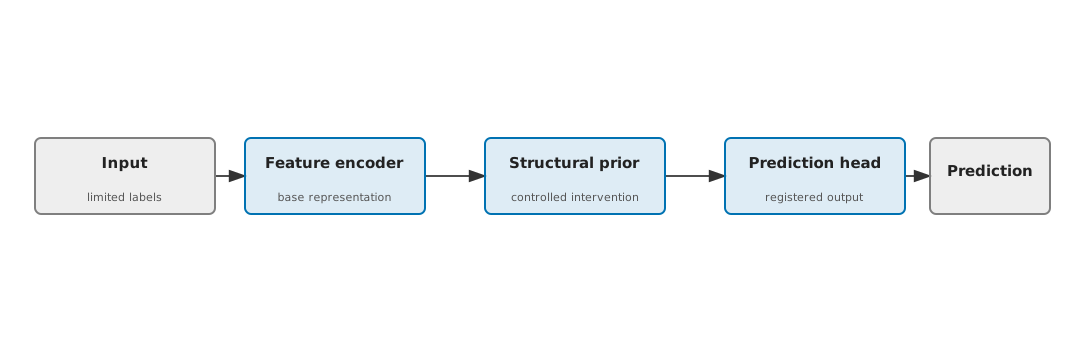
The constructed LatticeNet example contains low-label classification materials, then adds a central claim of better latency and memory than the baselines without corresponding measurements. The stored diagnosis sets RESEARCH_REPAIR_REQUIRED: language edits and visual refinement cannot repair it. The author must measure latency, throughput, peak memory and compute cost under fixed hardware, batch size, precision and evaluation rules, or remove the efficiency claim. The example shows that the tool checks evidence completeness rather than turning every input into a finished paper.
Conversations & next steps
I welcome discussions about the design of this tool and where it may be useful.