LANCER / HUMAN × AI
The Craft of AI Collaboration
Human at the helm. Intelligence in concert.
Across Codex and Claude Code: a thousand-agent scale of practice, with hundreds of agents orchestrated within a single task to advance tools, engineering, and creative work.

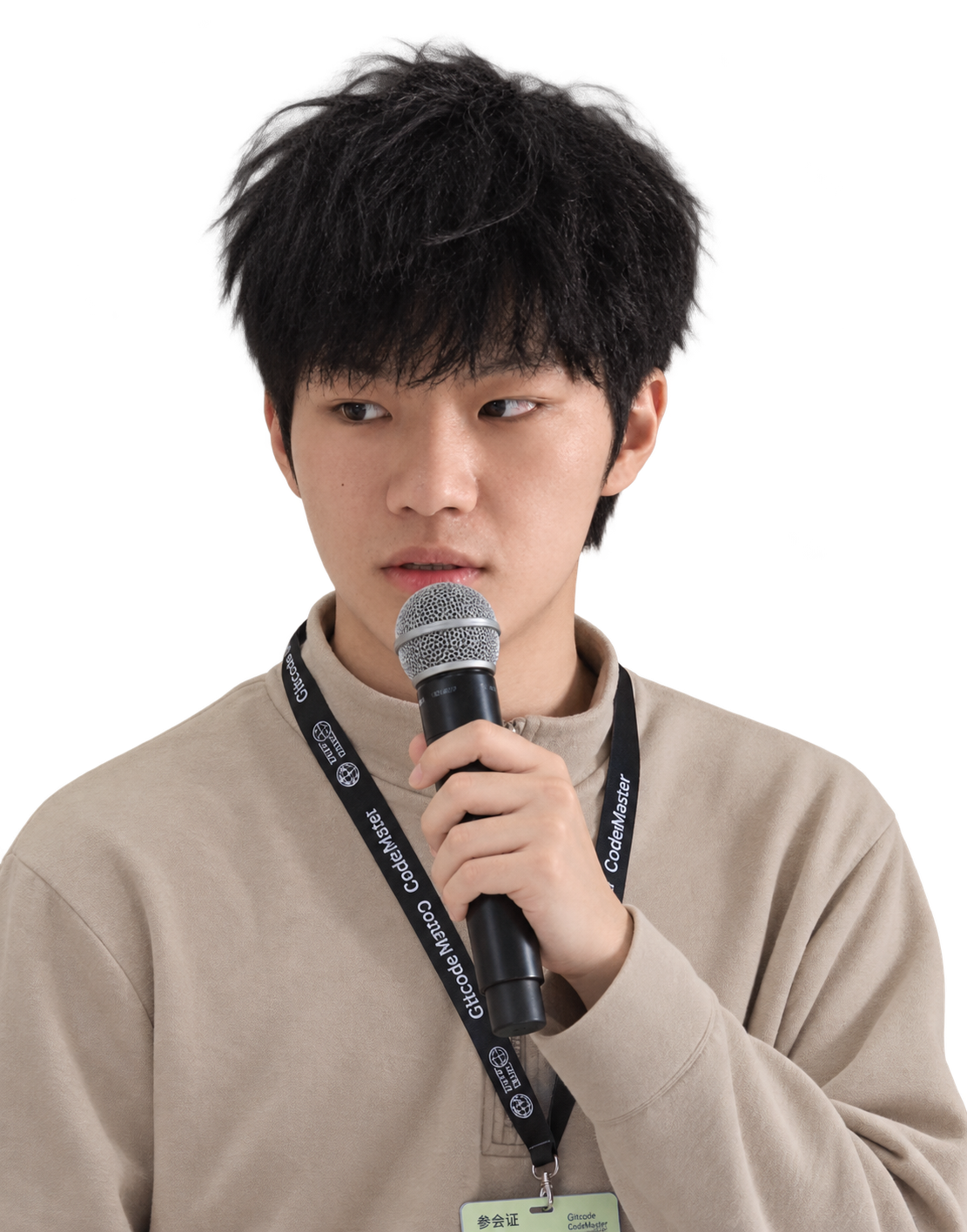
LANCER
Siyao Lan
Research · Engineering · Stories
How I work with AI
I establish the question, facts, and judgment criteria, then assign work to roles with clear responsibilities. AI contributes to exploration, implementation, and expression; I set direction, make tradeoffs, and take the final decision. Original drafts, counterexamples, and failures remain so the next round knows why to continue and what to change. As the work develops, I want to explain it more clearly and ask better questions.
The researcher stays present
Siyao Lan begins an AI collaboration with a question that needs to be made clear. He establishes why it deserves attention, which facts are supported, and what evidence would change the decision. For a paper, he asks whether its central contribution is a method, theory, or perspective. For engineering, he turns the goal into inputs, dependencies, and deliverable behavior. The scale of the question can change while responsibility for direction, standards, and tradeoffs remains with the researcher.
That presence appears in specific feedback. A missing condition sends the work back to its assumptions; a formulaic chapter sends it back to character actions and the reader’s experience; an unsuitable interface prompts a change in project structure. AI proposals enter the discussion, and human judgment determines what deserves to continue. The collaboration has a goal that can be revised and an author who keeps asking questions.
A thousand-agent scale. Hundreds within a task.
Siyao’s AI collaboration spans Codex and Claude Code. Reading, ideation, implementation, review, and expression are organized as clear responsibilities across platforms, accumulating collaboration at a thousand-agent scale. Within this practice, retained local Codex records from April to October 2026 contain 1,681 native subagent contexts with recorded activity. One context reads material, another implements a module, and a fresh context reviews the output under a different responsibility; the same model can take on different roles.
Within a single task, Siyao can direct and coordinate hundreds of agents around one goal, organizing reading, exploration, implementation, and review. Efficiency comes from clear task boundaries and dependencies: independent work advances in parallel, separate roles check key judgments, and artifacts and findings converge around the shared goal. Scale becomes coordinated action while the researcher retains direction and judgment.
At this scale, memory and handoffs become everyday work. The next participant needs to know where the question came from, which attempts failed, and which decisions the current version retains. Siyao gradually organizes collaboration into bounded tasks and records that let each contribution connect to earlier work. The number counts deduplicated contexts accumulated over time. It describes the scale of collaboration, while the resulting work is checked on its own terms.
A RECORDED PRACTICE
Retained active collaboration contexts in Codex
April–October 2026
This chart covers retained local Codex archives, a subset of the cross-platform practice. Grouped by context creation month, it counts deduplicated contexts with actual activity accumulated over time; it is not a concurrent-agent count, a count of distinct models, or a count of completed successful tasks.
Retained active contexts, grouped by creation month. Counts show recorded work, not task success.
Conceptual roles · select a responsibility to inspect
Read evidence
Trace claims to their materials and retain the scope of an observation.
Explore possibilities
Construct alternatives and ask which observation could distinguish them.
Build artifacts
Implement a bounded task, preserving its inputs, interfaces and version.
Review independently
Return to the source evidence and locate a repair rather than approving a fluent story.
Compose & visualize
Let prose and visual order explain the evidence without extending its claim.
Retain & return
Keep outcomes, rejected directions and the next question for a later round.
Clear roles, traceable rounds
He divides reading, ideation, implementation, writing, figures, and checking into responsibilities that can be owned. Independent tasks proceed in parallel; tasks depending on the same evidence are handed off in order. A producer delivers an artifact, and a reviewer returns to the original material to judge it. This division brings different perspectives to a question and sends a repair back to the affected location.
A harness is the coordination process that holds these handoffs: inputs, tasks, original drafts, versions, and reviews remain available, including where to resume after an interruption. A loop carries an unresolved question into the next round. A counterexample may change an assumption, a review may call for another comparison, and a failure may justify stopping a direction. Siyao designs the relationships between these responsibilities so the next action has an understandable reason.

QUESTION → EVIDENCE → REVISION
Frame a question
Assign roles
Make & observe
Review the evidence
Revise or stop
Make relationships visible and experiments informative
The relationships between tasks determine how a complex project can be understood. Siyao organizes work through modules and dependencies: which observation supports a claim, which interfaces a change affects, and which missing evidence blocks a decision. Graphs make these connections visible, helping structure reuse, checks, and revision. Workbenches and workflows are gradually connecting these research objects while retaining their sources and versions.
Automated experiments follow the same relationships. Establish the observation a hypothesis requires, choose a suitable reference, hold the necessary conditions consistent, and ask whether the result distinguishes the explanations. In bounded research loops, a program can run successfully while the experiment remains insufficient to advance a scientific claim. Retaining that outcome lets the next round reconsider the question, experiment, and decision together. Human judgment continues to enter the process.
Evidence
What is known?
Claim
What does it support?
Test & artifact
What could change the judgment?
Turn experience into skills that fit the task
Through repeated reading, writing, and review, he organizes recurring requirements into skills: which material a task needs, how its expression should be structured, what must be checked, and when another role should take over. Rules are revised through actual tasks, and relevant parts are loaded when needed. Experience gains a reusable entry point while leaving room for fresh judgment.
This work includes his own designs and the study, adaptation, and integration of existing tools and research methods. Siyao checks the actual entry point and version, retaining provenance, reasons for changes, and task feedback. When InkTide was initially given a display website, he redirected it into a project for native tools and prioritized Codex implementation. The decision places collaboration close to its real use: the entry point itself is part of the design.
Read & map
Literature review · Paper cards · Citation checks
Critique & refine
Contribution lenses · Independent review · Response writing
Build & test
Code review · Experiment records · Verification
Express & share
Scientific figures · Paper writing · Presentation design
My work includes choosing questions, designing collaboration, customization, and integration. It also uses platforms such as Codex and Claude Code, existing open-source tools, and research methods. Their provenance is retained, with author responsibilities stated for each artifact.
Collaboration reaches tools, engineering, and creative work
Collaboration takes shape in tools and creative work that can be opened, used, and inspected. Ariadne develops new research directions into proposals that retain hypotheses, pilots, and unresolved questions; InkTide connects materials, original drafts, revisions, and checks. Each tool has its own goals and means of validation, and its value develops through actual use and repeated improvement.
Engineering roles face execution and use. Sentinel focuses on the relationship between the final action and its execution context, with an open-source developer preview and inspectable software evidence delivered. InkTide connects author materials, original drafts, revisions, and checks. Through these tasks, Siyao develops his collaboration practice, bringing ideas into systems and retaining behavior and records that can be reviewed.
CIVILIZATION brings the collaboration into another form of creation. Characters need concrete desires and actions; chapters need varied scenes, causality, and rhythm; a long-form plan continues to change through writing. The music written for the novel, The Door That Stays, has its own lyrics, emotion, and listening experience. AI helps organize material and develop expression while the author continues to decide which people and feelings the story should reach.

InkTide
Let a manuscript be questioned
Author facts ground the argument, reading lessons guide expression, and independent checks return to specific sentences. InkTide preserves candidates, repairs, and negative outcomes, comparing actual manuscripts with a strong baseline to test the next revision.
Read the work ↗Sentinel
Connect the judgment to the final action
A model’s initial proposal and the action eventually executed can change. Sentinel organizes its research around actions, context, and execution records, delivering an open-source developer preview and software-validation evidence for an explicit, checkable question.
Read the work ↗CIVILIZATION
Let a story reach particular people
The author keeps asking how characters act, how chapters build causality, and how the rhythm changes. The novel and its original music develop the creative work together; AI helps organize and express it while human taste continues to determine its direction.
Read the work ↗FROM PRACTICE TO ARTIFACTS
What the work has produced
Ariadne · 7 research dossiers
A retained run generated 37 candidates, with 2 internally selected and 2 near misses. The run report records 175 new CLI role calls and 173 cached replays. Seven public dossiers drawn from the inference and database cases are proposals for further testing.
Sentinel · check the final action
In the software writer-preparation test, four conditions with ten trials each moved from 40/40 invalid dispatches to 0/40 after repair. The developer preview and simulation evidence are public.
InkTide · 9 actual final manuscripts
Three held-out groups, each with three writing conditions, preserve real paragraphs and comparisons. The current harness has not established a stable advantage over the strong baseline; the differences guide the next revision.
Let the collaboration develop human understanding
Siyao hopes the collaboration produces a deliverable and a clearer understanding of why an assumption holds, which evidence changed the decision, and where an elegant expression lost a necessary condition. That learning calls for questions, revisions, and personal choices. A new understanding can return to the next round and help frame a question worth answering.
Unmet goals also remain part of the work. For InkTide to exceed a stage-matched strong baseline, it has to face specific comparisons and failures, then test the proposed changes afresh. This sustained judgment and revision is the craft expressed by “The Craft of AI Collaboration”: a person sets direction, AI extends the work, and evidence helps both see the next step. Maturity develops through concrete choices and continues in the researcher’s understanding and the author’s eye.